From 0 to 100: Your Complete Guide to Business Process Automation
Introduction: Why Automation Matters Now More Than Ever
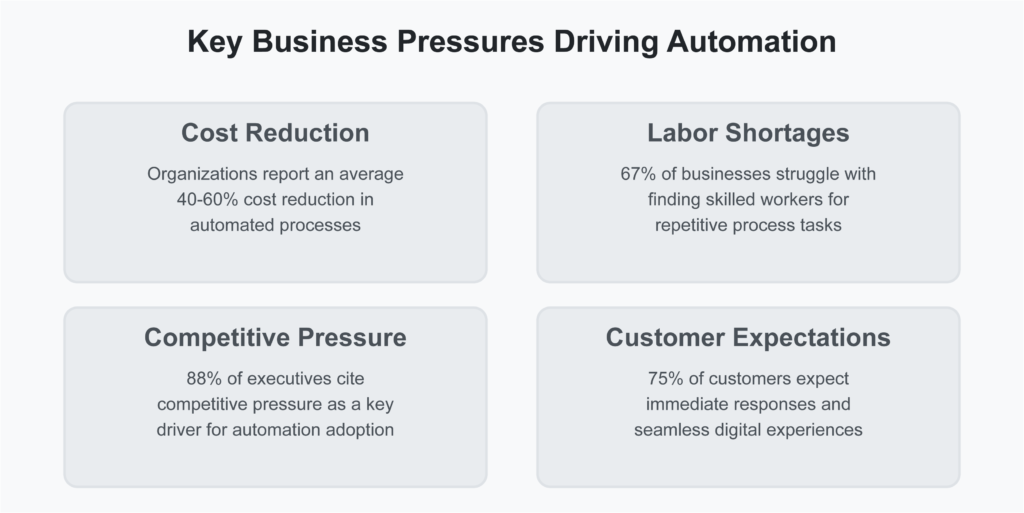
In today’s fast-paced business environment, the ability to do more with less isn’t just a competitive advantage—it’s a necessity. Business process automation (BPA) has evolved from a luxury for enterprise organizations to an essential strategy for businesses of all sizes.
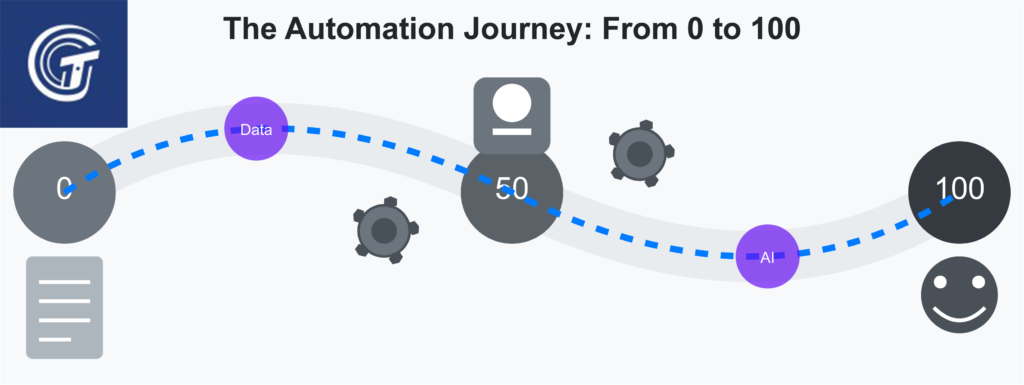
At iTechWay, we’ve guided countless organizations through their automation journeys, from taking their first tentative steps to achieving comprehensive, enterprise-wide transformation. This guide will walk you through the complete automation journey, from understanding the basics to implementing advanced solutions.
Stage 0: Understanding Your Starting Point
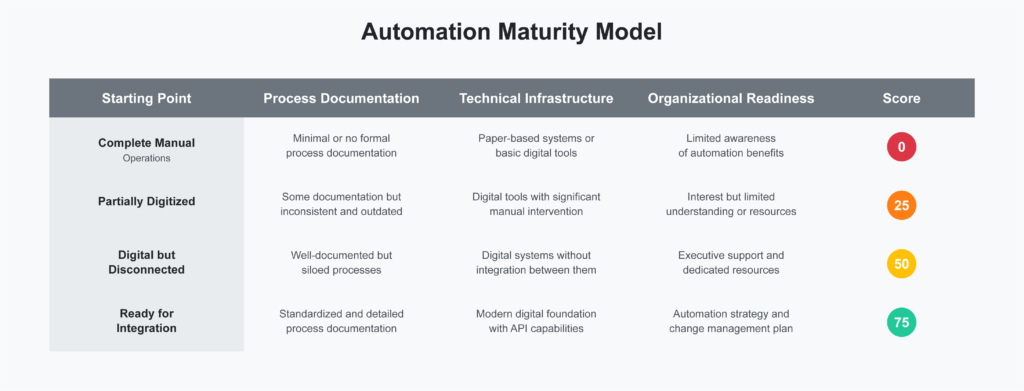
Before embarking on your automation journey, it’s crucial to understand where you currently stand. Most organizations fall into one of these categories:
- Complete Manual Operations: All processes handled manually with paper-based workflows or basic digital tools without integration
- Partially Digitized: Digital tools in place but significant manual intervention still required
- Digital but Disconnected: Digital processes exist but operate in silos with manual handoffs
- Ready for Integration: Digital foundation established but lacking automated workflows
Regardless of your starting point, the path forward follows similar steps, though the pace and complexity may vary.
Stage 25: Identifying Automation Opportunities
The first step in any successful automation journey is identifying the right processes to automate. Not all processes are equal candidates for automation.
What Makes a Good Automation Candidate?
- Rule-based: Processes with clear, defined rules
- Repetitive: Tasks performed frequently and consistently
- Volume: High-volume activities that consume significant time
- Error-prone: Processes where human error creates issues
- Stable: Workflows that don’t change frequently
- Standardized: Consistent processes across the organization
Process Discovery Methods
- Process Mining: Using specialized tools to analyze system logs and discover actual process flows
- Task Recording: Observing and documenting manual tasks performed by employees
- Value Stream Mapping: Visualizing end-to-end processes to identify bottlenecks
- Employee Workshops: Gathering insights directly from team members who perform the work
Stage 50: Selecting the Right Automation Tools
With clear automation opportunities identified, the next step is selecting the right tools for implementation. The automation landscape offers various options, each with distinct strengths:
UiPath
UiPath offers comprehensive RPA capabilities for organizations requiring enterprise-grade automation. Its strengths include:
- Robust process automation for complex environments
- AI-enhanced capabilities for unstructured data
- Strong governance and security features
- Enterprise scalability
Best for: Complex, enterprise-wide automation initiatives, particularly those involving legacy systems.
Microsoft Power Automate
Microsoft Power Automate provides accessible automation within the Microsoft ecosystem:
- Seamless integration with Microsoft 365 applications
- Low-code/no-code interface for citizen developers
- Built-in AI capabilities through AI Builder
- Cost-effective for organizations already using Microsoft products
Best for: Organizations heavily invested in the Microsoft ecosystem seeking accessible automation options.
Custom Automation Solutions
In some cases, a hybrid approach combining multiple technologies delivers the best results:
- Integration of multiple automation platforms
- Custom development to fill capability gaps
- Specialized solutions for industry-specific challenges
Best for: Organizations with unique requirements or complex integration needs.
Stage 75: Implementation Best Practices
Successful automation implementation requires more than just technical expertise. Follow these best practices to ensure your automation initiatives deliver the expected value:
Start Small, Scale Fast
Begin with well-defined, high-value processes that can demonstrate quick wins. Use these initial successes to build momentum and organizational buy-in before tackling more complex processes.
Involve Stakeholders Early and Often
Involve the people who know the processes best in your automation journey. Their insights are invaluable, and their buy-in is crucial for successful adoption.
Design for Exception Handling
No automation runs perfectly 100% of the time. Design your automations with robust exception handling to manage edge cases and unexpected scenarios.
Document Everything
Comprehensive documentation ensures your automations can be maintained and enhanced over time, even as team members change.
Test Rigorously
Thorough testing under various scenarios ensures your automations perform as expected in real-world conditions.
Stage 100: Building an Automation Center of Excellence
To truly reach “100” on your automation journey, you need to establish structures that support ongoing innovation and expansion. An Automation Center of Excellence (CoE) provides this foundation:
Key Components of an Effective CoE
- Governance Framework: Clear policies, standards, and approval processes
- Skilled Resources: Dedicated team with diverse expertise
- Technology Management: Centralized management of automation tools and licenses
- Process Pipeline: Systematic approach to identifying and prioritizing opportunities
- Knowledge Repository: Centralized documentation and reusable components
- Training Program: Skills development for both technical and business teams
Measuring Automation Success
Beyond the obvious metric of cost savings, a comprehensive measurement framework should include:
- Process Efficiency: Reduction in processing time and effort
- Quality Improvements: Error reduction and consistency gains
- Employee Experience: Satisfaction and engagement of employees freed from repetitive tasks
- Customer Impact: Improvements in customer experience metrics
- Innovation Enablement: New opportunities created through automation
Conclusion: The Continuous Automation Journey
Reaching “100” doesn’t mean your automation journey is complete. The most successful organizations view automation as a continuous evolution, constantly identifying new opportunities and refining existing solutions as technologies advance and business needs change.
At iTechWay, we partner with organizations at every stage of this journey, providing the expertise, tools, and support needed to transform operations through intelligent automation. Whether you’re just starting at “0” or looking to advance your existing automation program, we’re here to help.
Ready to Accelerate Your Automation Journey?
Contact our team today for a personalized assessment of your automation opportunities.
Contact us: Info@iTech-Way.com
About the Author: This post was written by the iTechWay Automation Strategy Team, drawing on our experience implementing automation solutions across industries.